False positives are one of the most significant yet often overlooked challenges. When a security alert signals a potential threat that turns out to be benign, security teams are left scrambling to investigate a non-issue. While it may seem like a minor inconvenience, the cumulative effect of false positives can be overwhelming. Not only do they drain resources, but they also lead to alert fatigue, reduce efficiency, and introduce the potential for real threats to go unnoticed.
False positives aren’t just a minor inconvenience, they represent a significant operational and financial burden for modern security teams. In a time when threats evolve faster than security teams can respond, every wasted investigation pulls critical attention away from the real threats targeting your business. For financial services, healthcare, and critical infrastructure organizations, this gap can directly increase risk exposure and operational downtime.
What Are False Positives in Cybersecurity?
False positives occur when a security system flags legitimate activity as malicious. These alerts are triggered when normal user behavior, software updates, or routine network activity is mistakenly identified as a security threat.
The causes of false positives can vary:
- Overly Sensitive Security Tools: Many security systems are set up to detect any deviation from the norm. When thresholds are too strict, everyday activities trigger alerts.
- Incomplete Contextual Data: Without sufficient data or context to analyze an event properly, security tools might misinterpret benign activity as a threat.
- Legacy Systems and Tools: Older security systems that lack modern threat intelligence and machine learning capabilities are prone to generating a high volume of false positives.

The Hidden Costs of False Positives
While false positives might not seem dangerous, their impact on an organization can be profound. These costs can be both direct and indirect, ultimately affecting the overall security posture.
- Direct Costs:
- Wasted Time and Resources: Each false positive requires an investigation by the security operations center (SOC). Analysts spend valuable time digging into alerts that pose no actual threat, diverting them from more critical issues.
- Increased Labor Costs: As the number of false positives increases, so does the workload. Organizations may need to hire additional security analysts to keep up, inflating personnel costs.
- Security Tool Maintenance: Constant tweaking of security tools to reduce false positives can become time-consuming and expensive. Fine-tuning detection rules and thresholds takes significant effort, especially as organizations scale their infrastructure.
- Indirect Costs:
- Alert Fatigue: SOC teams faced with constant false positives can develop alert fatigue. Over time, they may start ignoring alerts altogether, increasing the likelihood that a real threat will slip through the cracks.
- Burnout and Turnover: The repetitive nature of investigating false positives can lead to job dissatisfaction and burnout, pushing skilled analysts out of the profession and leaving organizations with talent gaps.
- Decreased Trust in Security Systems: If security tools consistently generate inaccurate alerts, organizations may lose faith in their cybersecurity systems, making them hesitant to rely on automated responses or trust system-generated insights.
Impact on SOC Teams and Business Operations
The SOC is the frontline defense for many organizations. However, when false positives flood in, SOC teams are stretched thin, unable to focus on real threats. False positives don’t just waste time—they exhaust resources and diminish team morale.
The impact on business operations extends beyond the SOC:
- Slowed Incident Response: With security teams tied up handling false positives, response times to legitimate threats slow down, leaving the organization vulnerable to attacks.
- Disruption to Business Continuity: Overreaction to false positives—such as shutting down networks, blocking services, or rolling back updates—can result in significant operational disruptions and financial losses.
- Damage to Reputation: In the worst-case scenario, missing a real threat due to alert fatigue or slow response can lead to data breaches or ransomware attacks. The reputational damage can far outweigh any initial financial losses.
Reducing False Positives with Modern Techniques
- Machine Learning (ML):
Machine learning algorithms can be trained to recognize patterns in user behavior and differentiate between legitimate and malicious activities. By learning from past alerts, ML models continuously improve their detection accuracy, helping security tools identify real threats while minimizing false alarms.
Reducing false positives is a critical goal for any organization aiming to streamline its security operations and improve efficiency. Advanced techniques like machine learning, contextual analysis, and automation have proven highly effective in combating the false positive problem.
- Contextual Analysis:
Context is key to reducing false positives. Instead of relying on binary threat detection (e.g., flagging an event as “safe” or “dangerous”), contextual analysis considers the broader environment in which an event occurs. For example, a user logging in from a new location might trigger an alert, but contextual analysis would take into account whether the login coincides with a business trip.
- Automated Threat Intelligence Integration:
Integrating real-time threat intelligence into security systems allows organizations to filter out known benign activities and focus on emerging threats. Threat intelligence feeds can help reduce false positives by providing data on recognized safe activities and known threats, allowing for more accurate threat prioritization.
- Multi-Layer Detection:
Implementing a multi-layer detection approach helps security teams validate alerts more effectively. Combining data from various sources such as endpoint protection, network security, and cloud monitoring can provide a more complete picture of the event, reducing the likelihood of false positives.
Automated Security Control Assessment with Veriti
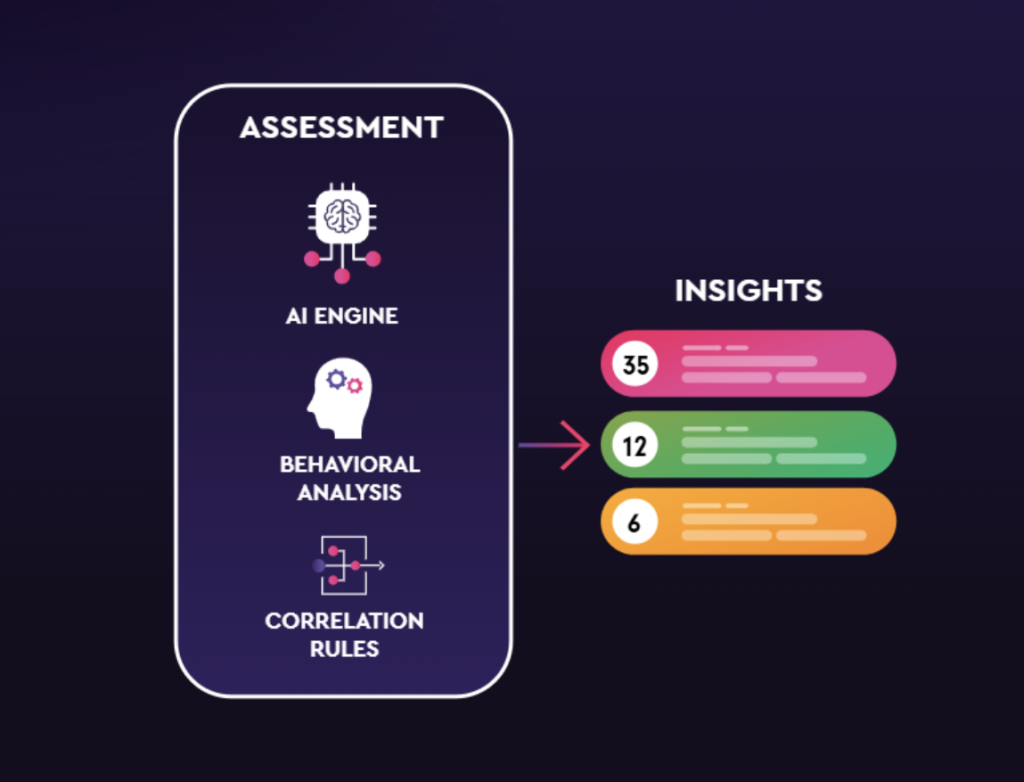
Automated Security Control Assessment (ASCA) takes false positive reduction to the next level by continuously validating whether your existing security controls are properly configured to detect and block threats in real-time. By analyzing configurations across your entire security stack, from endpoint to firewall to cloud, ASCA highlights misconfigurations contributing to unnecessary alerts and proactively adjusts controls to reduce noise before it reaches your SOC.
- Deploy Agentless: Veriti’s agentless approach leverages APIs for seamless integration with existing security tools, enabling comprehensive exposure monitoring without additional hardware or software.
- Choose Your Integrations: By seamlessly integrating with your security stack, Veriti eliminates silos, provides exposure visibility, and enhances security team’s ability to proactively respond to security gaps and misconfigurations that can jeopardize your security posture and disrupt critical business operations.
- Continually Identify Exposures: Through consolidating and correlating data from various sources, including VAs, BAS tools, and intelligence feeds, Veriti automatically identifies the root causes of vulnerabilities, security gaps or business disruption incidents for targeted risk prioritization.
- Know All Remediation Paths: Veriti uses API-driven configuration changes and advanced machine learning to ensure corrective actions do not trigger false positives or cause application downtime, maintaining business continuity and operational integrity.
Case Study: Reducing False Positives to Improve Security Posture
A large financial services company was struggling with an overwhelming number of false positives generated by its legacy security system. The SOC team spent over 70% of its time investigating alerts that were false positives, resulting in burnout and slow response times to real threats.
The organization implemented Veriti’s automated security controls assessment platform to streamline security operations and enhance its cybersecurity posture. A month-long proof of concept was conducted, integrating Check Point firewalls and CrowdStrike EDR into Veriti.
After adopting an advanced security platform that incorporated machine learning and contextual analysis, the company saw a dramatic improvement in its operations. False positives were reduced by 60%, allowing the SOC team to focus on real threats. The company’s overall security posture improved, and the team reported higher job satisfaction as they were no longer bogged down by false alarms.
Veriti’s Approach to False Positive Reduction
At Veriti, we understand the frustration and inefficiencies caused by false positives. Our solution leverages automated security control assessments, real-time sharing of threat intelligence, and safe remediation to dramatically reduce false positives and help your SOC team focus on what truly matters—real threats.