Organizations are constantly faced with the challenge of addressing vulnerabilities and threats to maintain a secure environment. Two common strategies to aide in this are remediation and mitigation, both of which aim to reduce risk but with different approaches and timelines. Understanding the distinction between these strategies—and knowing when to apply each—can be crucial for effective threat management.
What is Remediation?
Remediation is the process of directly addressing a vulnerability or security issue to eliminate it entirely. It involves applying a permanent fix to resolve the root cause, such as patching a software flaw, updating configurations, or removing a compromised asset. The goal of remediation is to restore a system to a secure state and prevent the vulnerability from being exploited again in the future. With remediation, the action taken is immediate and direct, providing a long-term solution to the problem. This is ideal for situations where a quick and definitive fix is needed to maintain security.
Every Remediation Needs an Audit Trail
Modern remediation isn’t just about fixing a vulnerability, it’s about proving exactly what was done, by whom, and whether it reduced risk. Every remediation action should be documented in a clear audit log, showing approvals, changes made, and impact assessments to provide full transparency to both security teams and auditors.
Automated Reporting for Continuous Improvement
With Veriti, every remediation action whether automated or manual, feeds directly into a real time reporting engine. This provides clear visibility into what’s working, where delays are occurring, and how the overall remediation strategy can be optimized to improve security posture and operational efficiency.
What is Mitigation?
Mitigation, on the other hand, focuses on reducing the impact or likelihood of a vulnerability being exploited, without necessarily eliminating the underlying issue. Mitigation measures can include applying temporary workarounds, implementing compensating controls, or limiting access to the affected resource. The objective is to buy time and reduce the risk associated with the vulnerability until a more permanent remediation can be applied.
While mitigation can be effective in minimizing damage, it is not a substitute for a permanent fix. It is an interim solution designed to lower risk while providing the flexibility to plan for a comprehensive remediation strategy.
The Key Differences Between Remediation and Mitigation
| Remediation | Mitigation | |
| Goal | Eliminate the vulnerability | Reduce the impact or likelihood of exploitation |
| Approach | Direct and permanent | Indirect and temporary |
| Timeframe | Immediate action | Short-term solution until permanent fix is available |
| Risk Reduction | Long-term, complete resolution | Partial, temporary reduction |
| Use Case | When a definitive fix is available | When an immediate fix is not feasible |
Choosing between remediation and mitigation depends on several factors, including the severity of the vulnerability, available resources, and potential impact on business operations. Here are some considerations to help guide the decision:
- Urgency and Risk Level
When a vulnerability poses a high risk and requires immediate attention, remediation is the preferred choice. By directly fixing the issue, organizations can eliminate the threat and restore security quickly. However, if a quick fix is not feasible or could disrupt business operations, mitigation can be used to temporarily reduce the risk until a permanent solution can be implemented.
- Resource Availability
Organizations with limited resources may find it challenging to immediately remediate every vulnerability. In such cases, mitigation serves as a practical approach to minimize exposure while prioritizing which vulnerabilities should be addressed first.
- Impact on Business Continuity
Some remediation actions, like applying a critical patch, could potentially disrupt business operations. In these scenarios, mitigation can be a valuable strategy to maintain business continuity while still addressing the risk in the short term.
Why Choose Remediation for Instant Action?
While mitigation provides a temporary fix, remediation offers an immediate, long-term solution that permanently resolves the issue. This approach is particularly beneficial in scenarios where a critical vulnerability is discovered, and the potential damage from exploitation is significant.
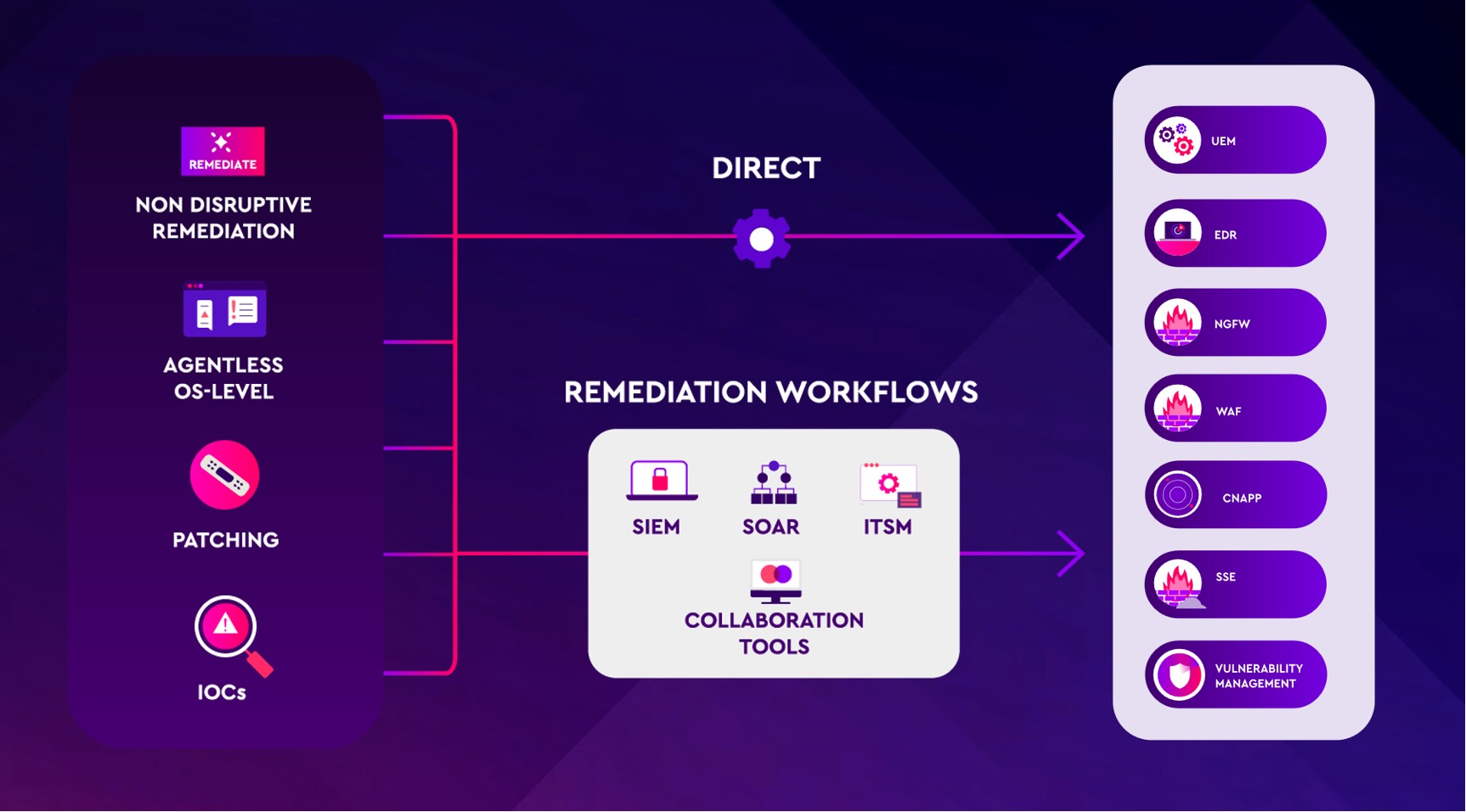
With a platform like Veriti, remediation doesn’t have to mean disruptive or time-consuming actions. Veriti’s solution allows organizations to remediate risks directly within their existing infrastructure, leveraging non-disruptive, agentless OS-level changes and automated workflows to fix issues in real time. Instead of merely providing recommendations or playbooks, Veriti empowers security teams to remediate risks instantly—without waiting for external integrations or lengthy approval processes.
Eliminate False Positives: Fix What Matters
One of the biggest risks in remediation is acting on false positives, wasting time and disrupting business for non-issues. Veriti eliminates this by automatically correlating exposures to real-world threat intelligence and security control data, ensuring that only validated risks are remediated. This reduces unnecessary noise and allows teams to focus only on what truly matters.
Self-Correcting Security with Adaptive Remediation
Remediation shouldn’t break business processes. Veriti’s remediation engine continuously learns from system behavior, applying changes dynamically while preserving normal workflows. This adaptive approach ensures that remediation strengthens security without introducing operational risk, turning security into an enabler rather than an obstacle.
From Action to Assurance: Veriti’s End-to-End Approach
Remediation is no longer just a technical fix, it’s a critical business process that requires full transparency and accountability. Veriti automatically tracks every remediation action across your hybrid environment, documenting who approved it, what was changed, and the resulting impact on security posture. This seamless audit trail, combined with automated reporting and validation, ensures that every action taken contributes to measurable, provable security improvements, helping organizations align security operations with business objectives and regulatory requirements.
Remediation vs. Mitigation—Making the Right Choice
While both remediation and mitigation are valuable strategies in cybersecurity, understanding their differences and applications is key to effective threat management. Mitigation serves as a temporary shield to minimize risk when an immediate fix isn’t feasible, but remediation provides a permanent solution that eliminates the vulnerability entirely.
With Veriti, organizations can confidently choose remediation for instant action, benefiting from real-time risk elimination without disrupting business continuity. Veriti’s platform simplifies the decision-making process by allowing you to prioritize, act, and resolve vulnerabilities swiftly, ensuring that your organization remains secure and resilient.